CARBON MATERIALS GROUP← PEOPLE
People · Principal Investigator

Ding Jiang 蒋鼎

Lecturer, School of Energy and Power Engineering, Jiangsu University · Leader of the Carbon Materials Group

DOWNLOAD CVGOOGLE SCHOLAR ↗RESEARCHGATE ↗

About

A researcher who likes both the lab bench and the command line

Ding Jiang is a lecturer at the School of Energy and Power Engineering, Jiangsu University. His research asks a simple question: how do we turn biomass — an abundant, messy, low-value resource — into fuels, chemicals and functional materials that are actually worth something?

His approach pairs experiments with theory. Catalytic conversion and carbon materials on one side; density functional theory (DFT) and data analysis on the other. The computation explains what the experiment sees, and the experiment keeps the computation honest.

Outside the lab, he writes a blog on this site about research craft and about working with AI assistants — what they are genuinely good at, and where they quietly go wrong.
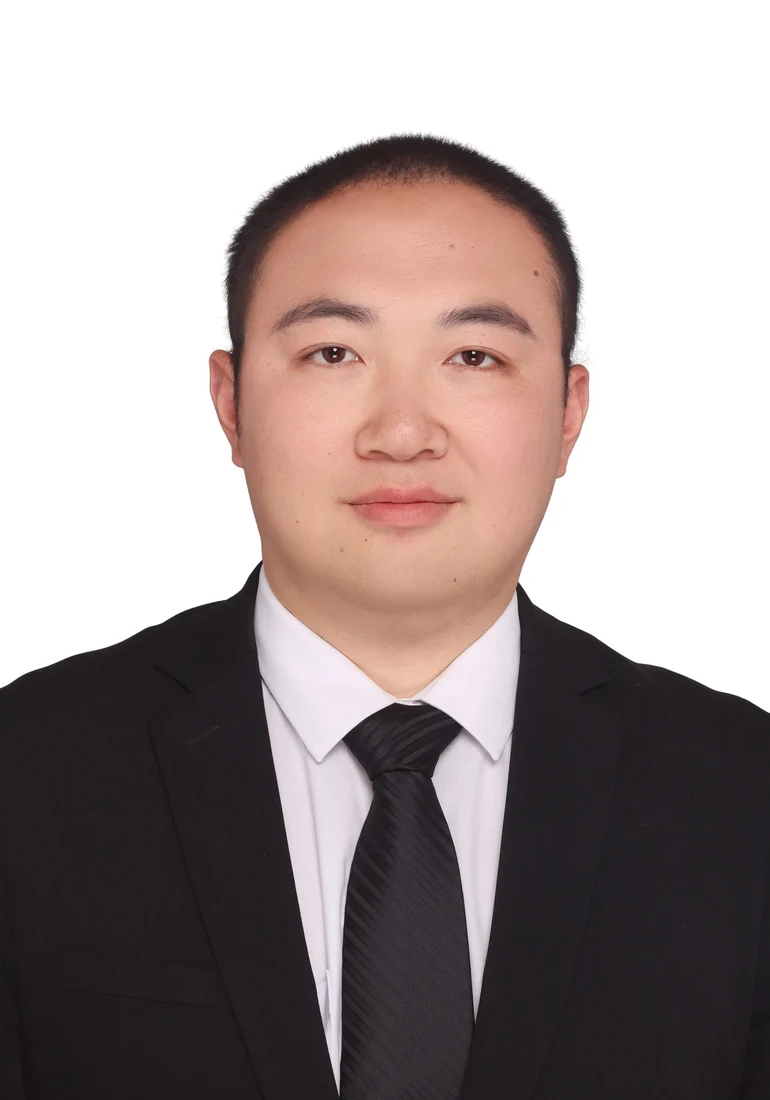
Portrait of Ding Jiang
Milestones

The road so far

OCT 2026
Oral presentation at APBC 2026 — the Asia-Pacific Biochar Conference in Seoul, South Korea, presenting the group's recent work.
2024
NSFC Young Scientists Fund — principal investigator of Grant No. 52406244, National Natural Science Foundation of China.
2023
PhD completed at Jiangsu University; selected into the National Postdoctoral Researcher Program (Category C).
2022
Science and Technology Award of Jiangsu Province.
2019
National Scholarship for Master's Students; Outstanding Doctoral Student Freshman Scholarship (Class A).
2016
BSc at the School of Energy & Power Engineering, Jiangsu University — where this story started.
Selected Publications

Eight papers that show how the group works

Selected from 20+ SCI-indexed articles — each one pairs experiments with computation, so the two keep each other honest.

2025

Optimizing vanillin production from guaiacol-type precursors

ChemSusChem
2024

Catalytic role of biochar surface groups in phenol formation from lignin pyrolysis

Chemical Engineering Journal
2024

Study of the catalytic pyrolysis mechanism of guaiacol over seaweed-derived carbon catalyst based on DFT and machine learning

Fuel 369, 131529
2023

Chemical process of multiphase system in lignin-biochar co-pyrolysis for enhanced phenol recovery

Fuel Processing Technology 250, 107882
2023

A mechanism study of methylene blue adsorption on seaweed biomass derived carbonHigh Cited Paper

Process Safety and Environmental Protection 172, 1132–1143
2022

Insight into the CO2 adsorption onto biomass-pyrolysis derived charHigh Cited Paper

Fuel 332, 125948
2022

Activation of nitrogen-doped carbon materials on the C–N bond and C–O bond

ACS Sustainable Chemistry & Engineering 10, 7473–7484
2021

Insight into the mechanism of glycerol dehydration and subsequent pyridine synthesisCover Article

ACS Sustainable Chemistry & Engineering 9, 3095–3103

Full publication list on ResearchGate (Ding-Jiang-5) →

Writing

Notes on research craft and working with AI

Occasional essays from the blog — written for researchers, in plain language, with the AI kept in its proper place: the toolbox.

Start here

Opening Post: My AI Learning Journal

Why this site exists, and how I learn in public — one tool, one experiment, one honest write-up at a time.

Read the post →
Research craft

The Hard Craft of Writing a Review

Framework, citations, prose, and mentoring — what writing review papers the hard way taught me about all four.

Read the post →
AI practice

Taming Your AI Assistant: A Pitfall Guide

What actually goes wrong when you hand real work to an AI assistant, and the habits that keep it honest.

Read the post →
Research craft

The Door Is on the Paywall Itself

How I actually reach a paper's full text — start from the paywall's own institutional button, and read the HTML, not the PDF.

Read the post →
Portrait of Ding Jiang
Available for collaboration

Let’s work together

Research collaboration, consulting on biomass conversion and computational catalysis, or just a good argument about AI in science — my inbox is open.